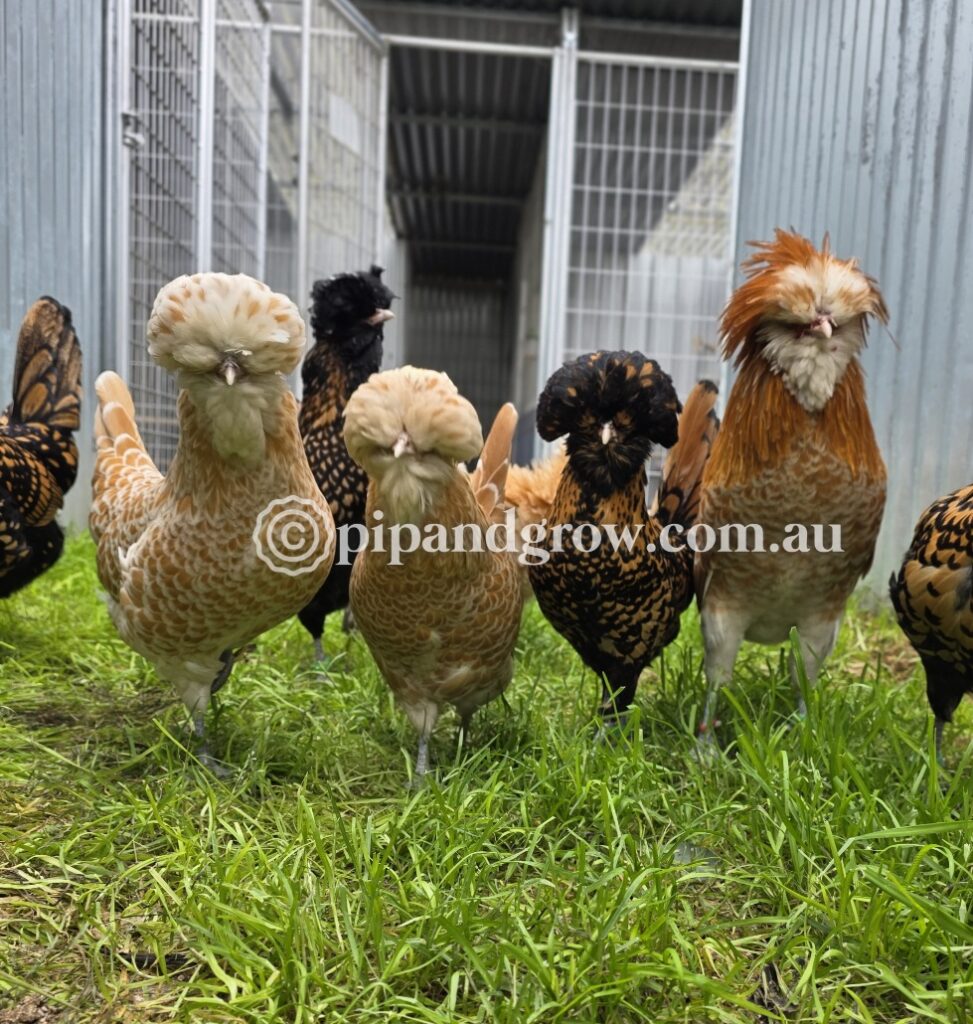
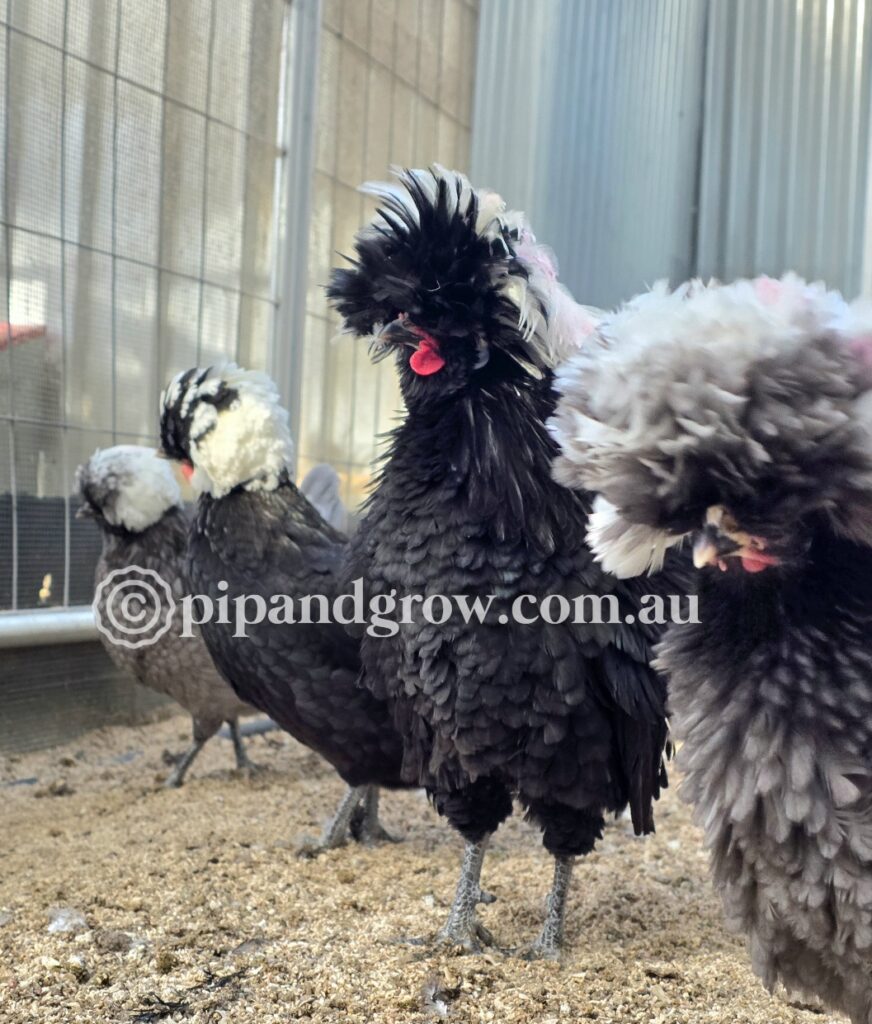
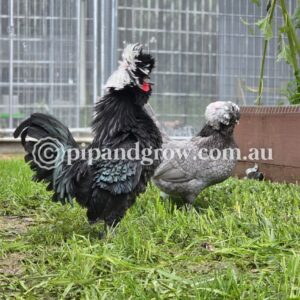
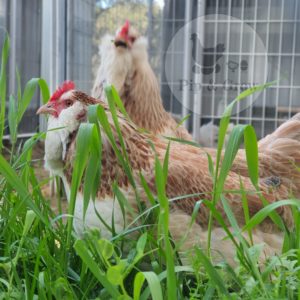
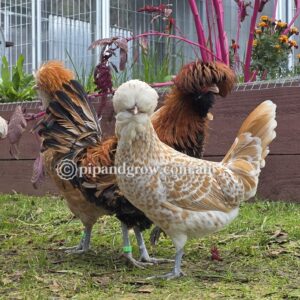
Bantam, Pen 1. Buff & Gold Laced Pen 2. Black & Blue Crested
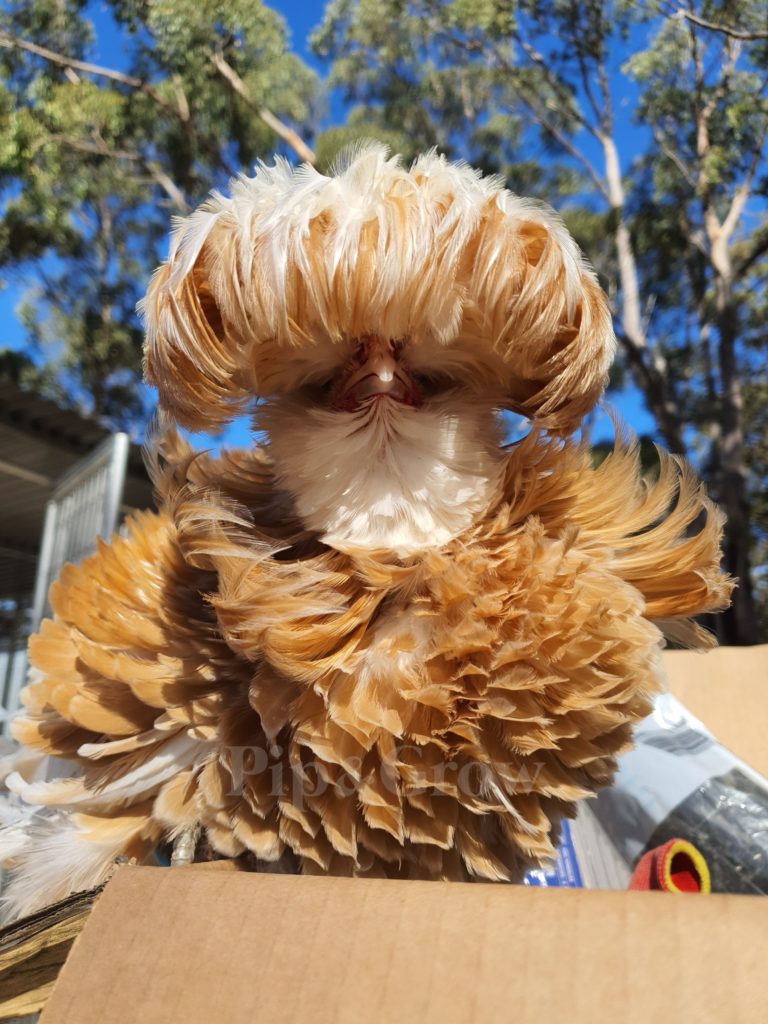
Both with Frizzle breeders with small chance of *Frazzle*
Originated from Europe/ Russia.
Bantam mature weight is around 1kg
Slow maturing – first eggs around 7- 8 months.
Medium to large sized white eggs, expected to lay between 150-200 per year.
Broodiness – does not go broody often
Maintenance – low, occasional feather trim may require around eyes for better vision.
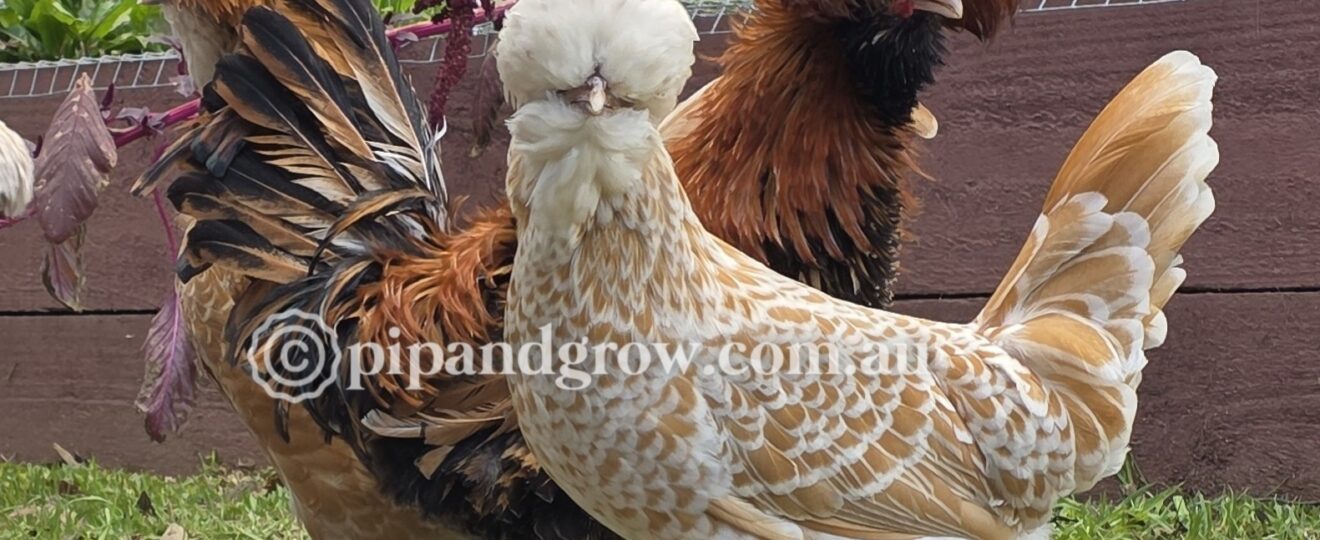
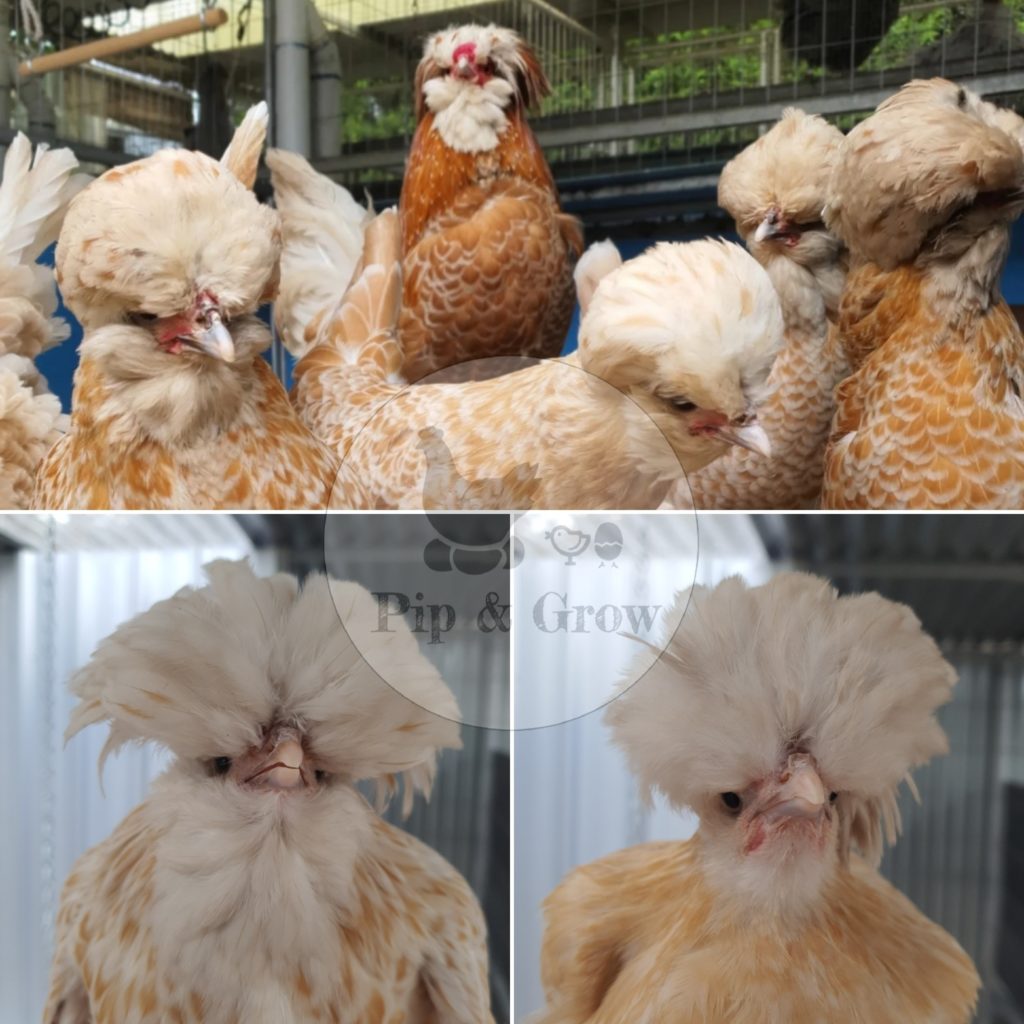
Polish is a delightful breed of chicken known for its distinctive crest of feathers on top of its head, resembling a stylish hat. Originating in the Netherlands, Polish have become popular worldwide for their unique appearance and friendly temperament. They come in two different sizes – Standard and Bantam, their plumage comes in a variety of colors, including white, black, buff, silver, and golden, each adding to their visual appeal. Polish bantams have a compact body with a round, fluffy appearance. Their feathered crests give them a charming and somewhat comical look, though the size and shape of the crest can vary between individuals. In some cases, the crest may partially obstruct their vision, making them more vulnerable to predators. Because of this, it’s important to provide them with a safe and secure enclosure. Polish females are known for their friendly and sociable nature, while males can be slightly protective of their hens. Overall, they are typically docile and easy to handle, making them a great choice for families with children and other pets. They are also known to be excellent layers of small to medium-sized eggs and don’t exhibit broody behavior often, making them both beautiful and practical additions to any backyard flock. Requiring minimal care, we find them to be quite hardy and adaptable to most climates. They may benefit from occasional trimming around the eyes for better vision. In mixed flocks, they tend to occupy a mid-range position in the pecking order. For optimal compatibility, it’s recommended to keep them with similar-sized breeds such as Silkies, Belgians, Bantam Orpingtons, rather than larger full-sized breeds. Buff laced polish rooster “Stevie” 2024 Polish is one where the Frizzled feather trait is accepted as “Pure” according to the Australian Poultry Standard. The Frizzle gene is passed down to approximately 50% of offspring, meaning that not all chicks hatched from a Frizzled hen’s egg will inherit this trait. Frizzled gene carriers can be identified around day 5 when chicks begin to develop their first feathers around the wing tips. Buff Laced Bantam Polish has been one of our original breeds since the start of Pip & Grow. Over the years, we have bred many beautiful birds, and several other breeders around Australia have sourced their lines from us and continue to breed from them today. In the 2026/27 season, we are excited to begin releasing our very first Black Crested and Blue Crested varieties. This marks an exciting new chapter in our breeding program, and we will continue refining this line with a strong focus on achieving cleaner, more refined crests while maintaining overall type and quality. During the 2024/25 season, we observed a weakening in the buff coloration of some offspring. To improve lacing quality and enhance colour depth in our Buff Laced line, we introduced Gold Laced birds from a different bloodline. This has already contributed to better colour richness and improved definition of the lacing within our breeding program. In the 2026/27 season, planned Frazzle breeding is underway in both breeding pens as part of our ongoing efforts to improve the quality of frizzled birds in our line. Through careful selection, we aim to develop stronger, better-structured Frizzles with improved feather quality while maintaining overall type and health. Please see Polish – Open Poultry Standard Australia for more info and breed standards.
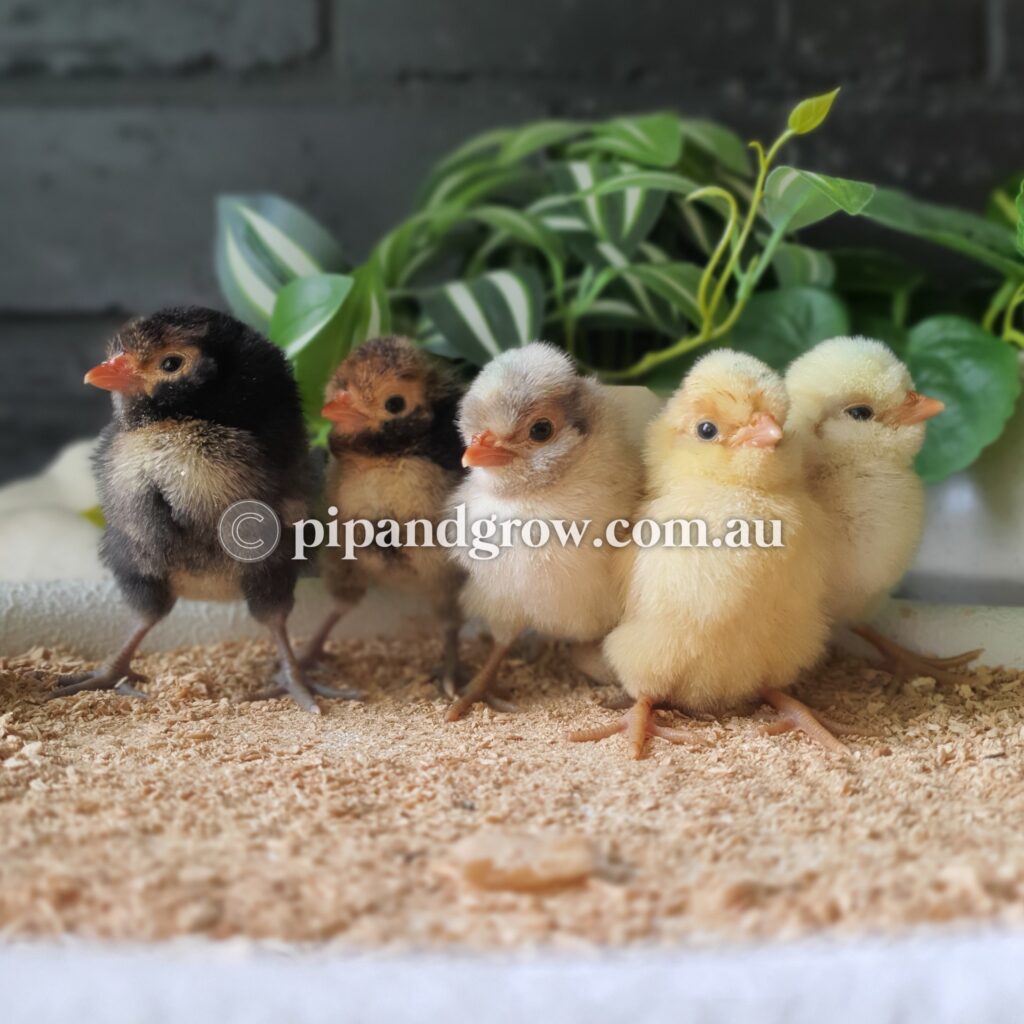
Polish Chicks
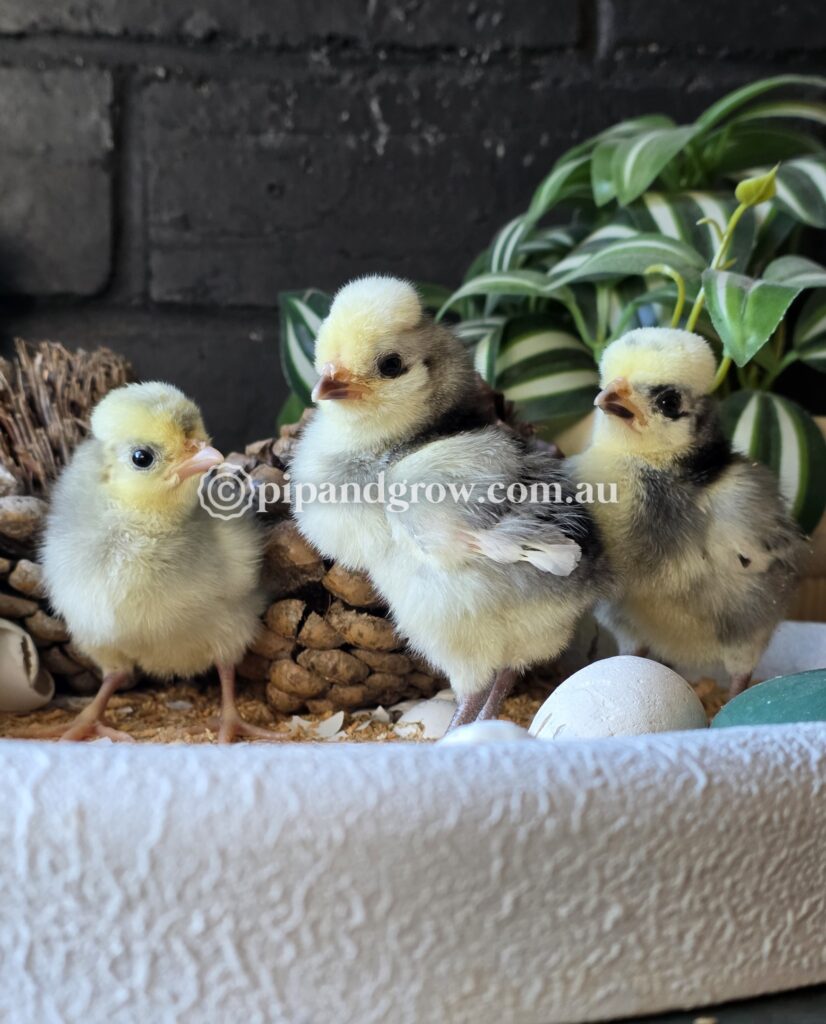
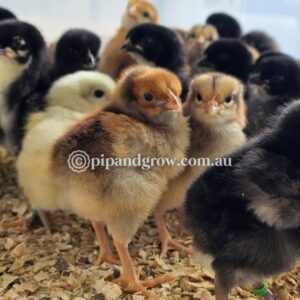
Black & Blue crested Polish chicks
Our Buff and Gold laced Polish chicks hatch in a range of shades, but as they mature, they will develop into Gold Laced or Buff Laced, with the occasional White appearing. The majority will hatch with beards, as all of our breeding stock are bearded—with very rare exceptions (see note below).
Bearded offspring (left), none bearded offspring(right) siblings from all bearded parents
The beard trait is an autosomal incomplete dominant trait. This means that it is typically dominant, but not always. Even if both parents have full beards, there can still be non-bearded offspring. The expression of this trait is not absolute, and variations can occur in the next generation.
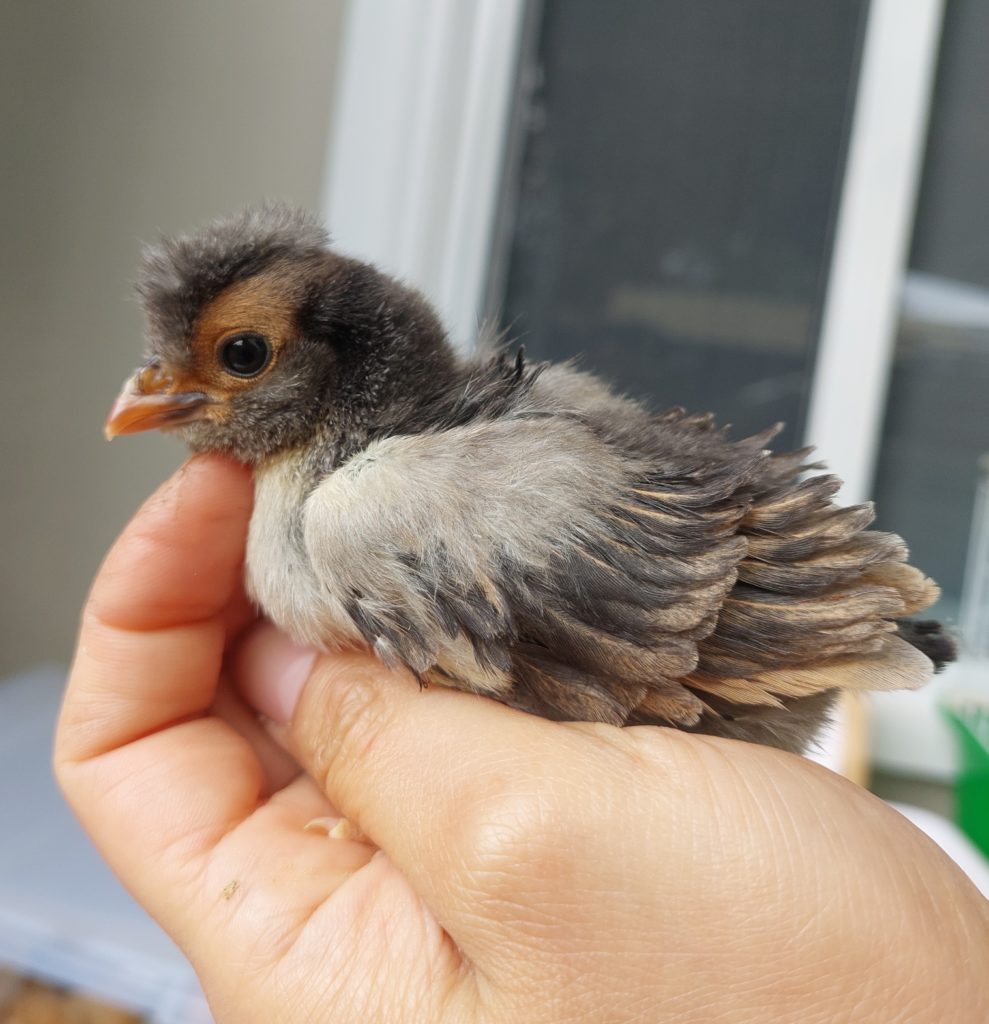
When it comes to frizzled and smooth feather traits in our delightful chicks, their outward appearance doesn’t reveal the secret. Both carriers appear quite similar in their feathering. However, the magic begins to unfold around day 5 to 7, when the wing feathers start to give away the telltale signs of frizzled feathers.

 *21/11/2026* Dayold ChicksPrice range: $30.00 through $90.00 inc GST
 *24/10/2026* Dayold ChicksPrice range: $30.00 through $70.00 inc GST
 Black & Blue Polish Fertile Egg (each)$15.50 inc GST
 18wks+Pullets & HensPrice range: $40.00 through $180.00 inc GST
 Buff & Gold laced Polish Fertile Egg (each)$15.50 inc GST