Can we cover the chicken coops to keep them warm?
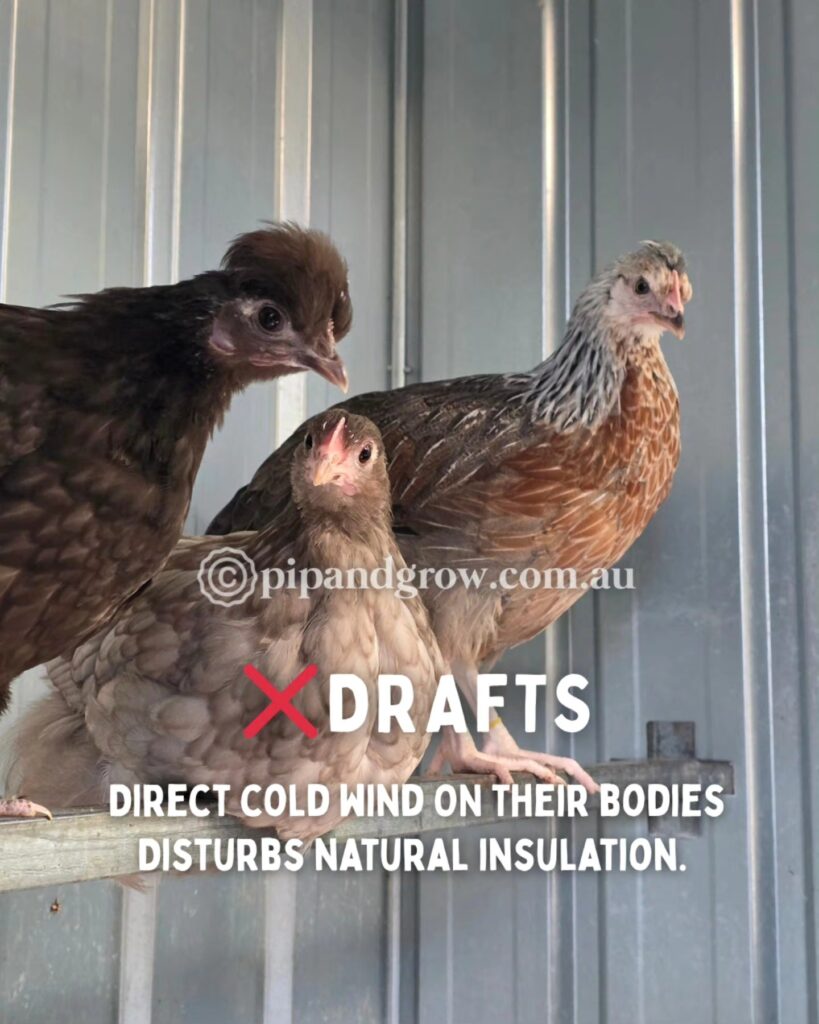
In the Northern Hemisphere, where there are snowstorms, frozen water, and sub-zero temperatures, keepers often take extra steps to keep their flocks extra cozy. Luckily, here in Australia, we don’t really need to go that far during the cold season. However, we do need to talk about sealing up the coop vs. keeping it fresh.
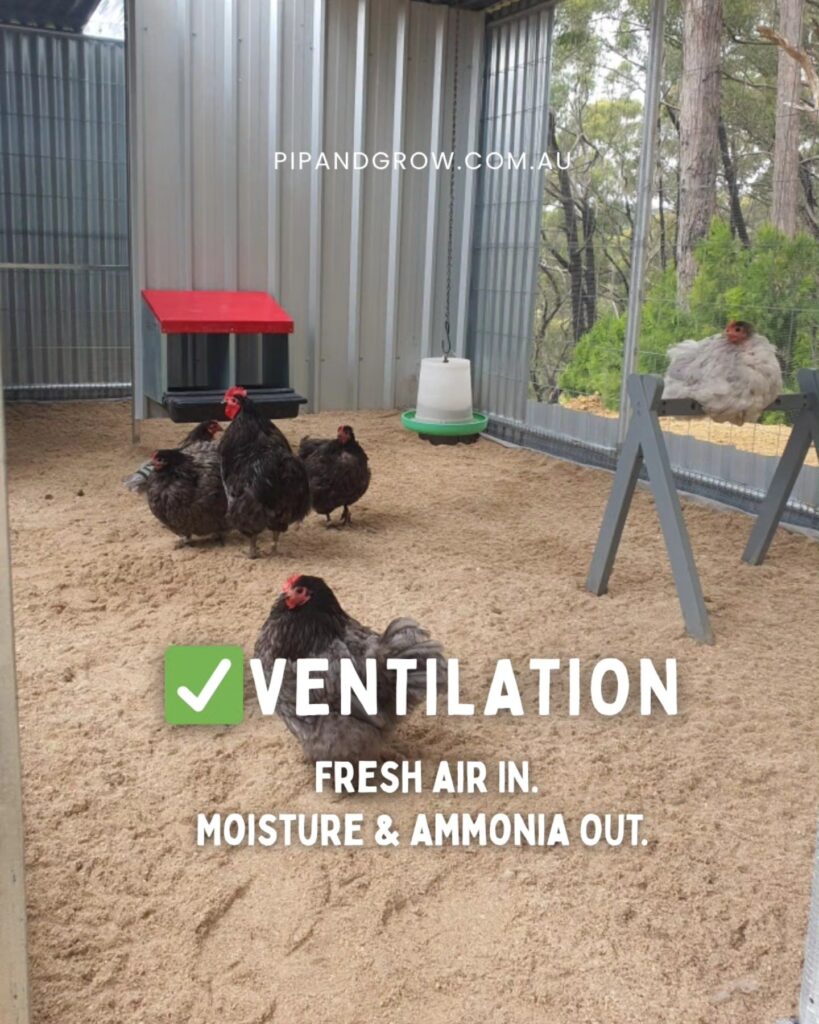
Before we go any further, please remember that many chicken breeds actually originated in countries with sub-zero winters. They can happily walk on snow! Our Australian winter is really nothing to them—chickens are far more prone to heat stress than cold stress.
Chickens are essentially wearing premium down jackets all year round. Their normal body temperature sits at around 41°C. They are built to handle the chill. What they absolutely cannot handle are drafts, trapped moisture, and ammonia gas.
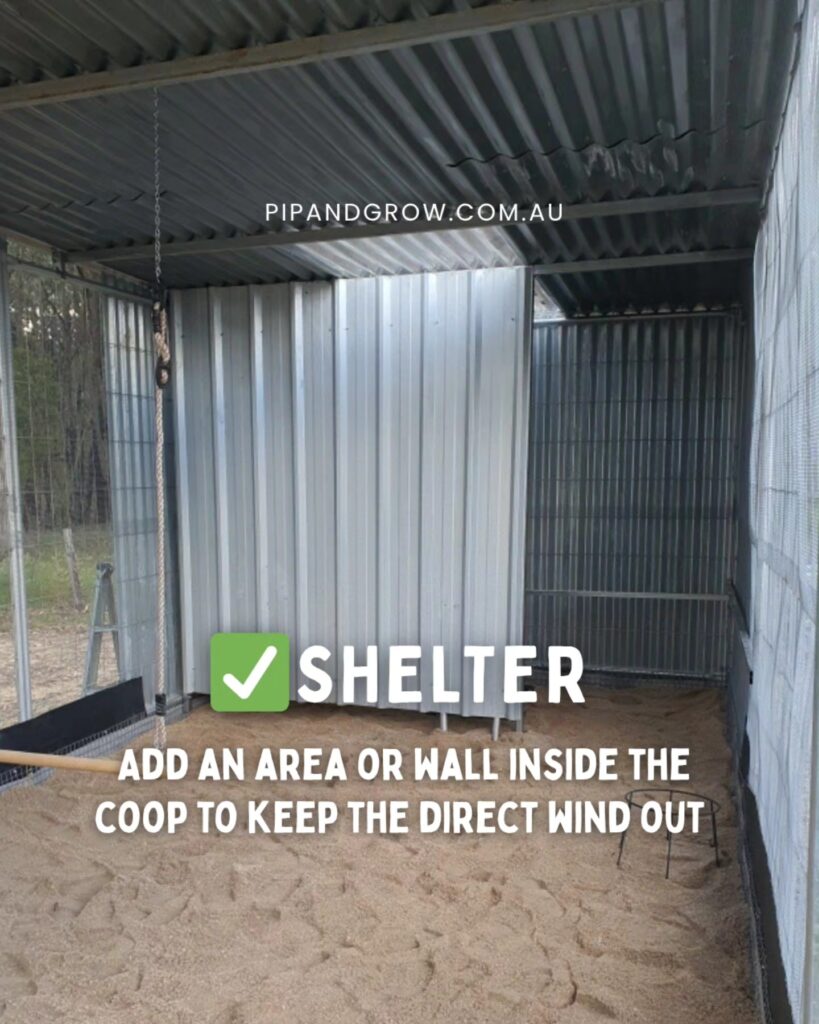
Trapped moisture is actually the number one cause of winter frostbite. At night when the flock sleeps, their bodies naturally generate heat. This warm air rises to the ceiling of the coop. If there is no ventilation for that air to escape, the moisture builds up, forms condensation, and literally drips back down onto the resting birds overnight. It is this freezing dampness settling on their combs and wattles that causes frostbite, not the cold temperatures alone.
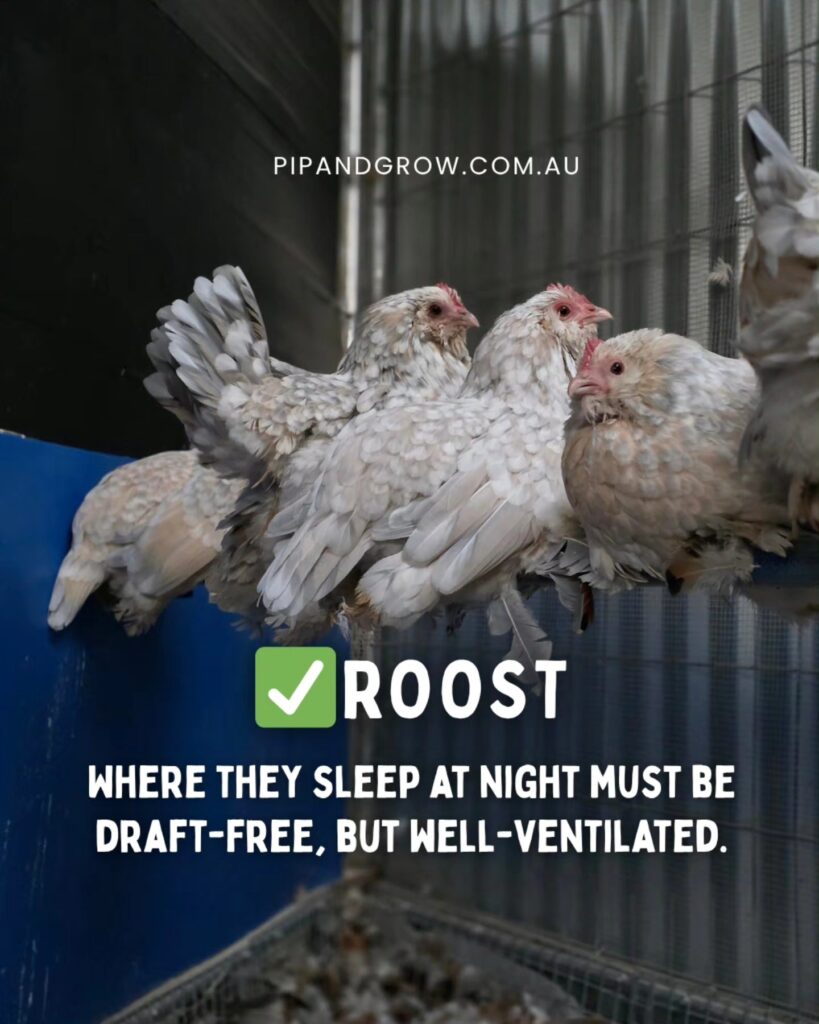
Trapped moisture is actually the number one cause of winter frostbite. At night when the flock sleeps, their bodies naturally generate heat. This warm air rises to the ceiling of the coop. If there is no ventilation for that air to escape, the moisture builds up, forms condensation, and literally drips back down onto the resting birds overnight. It is this freezing dampness settling on their combs and wattles that causes frostbite, not the cold temperatures alone.
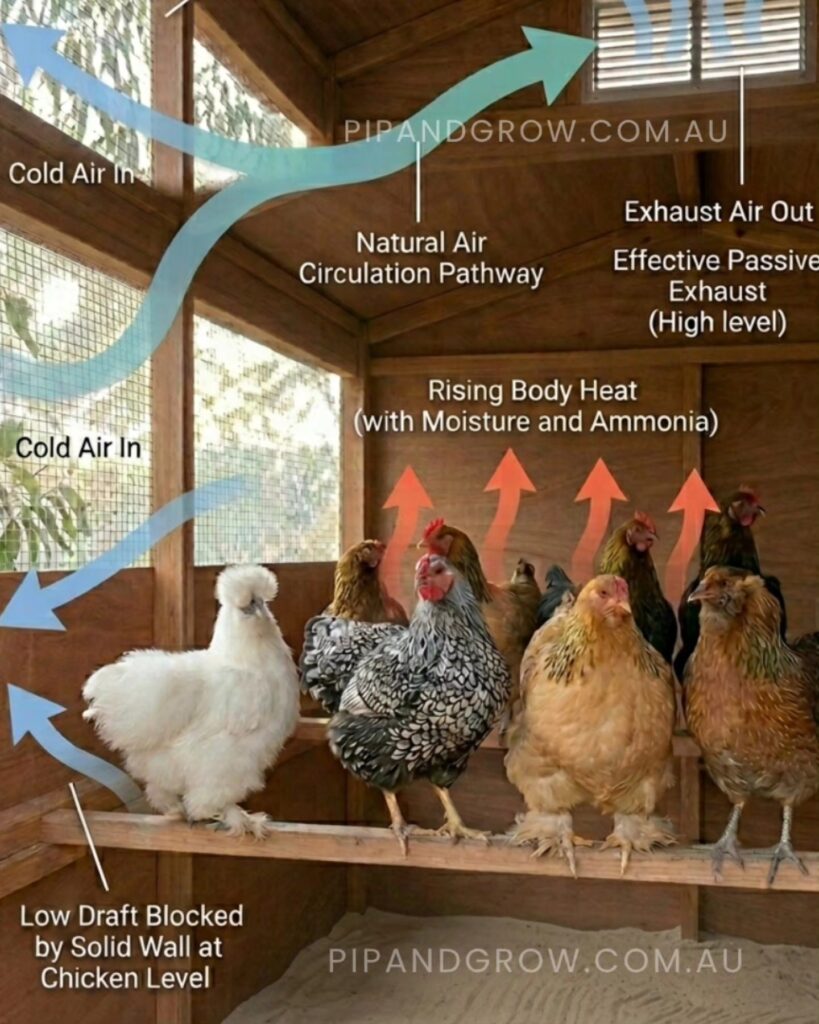
Keeping chicken coops draft-free is incredibly important, but please do not completely seal or cover the entire coop. Always leave a sufficient gap near the roofline for air movement, especially in the sheltered area where they sleep.
True ventilation is air exchange happening high above the chickens’ heads when they are roosting. This allows the warm, moisture-heavy, ammonia-filled air to naturally rise and escape, keeping the coop perfectly dry and fresh.