
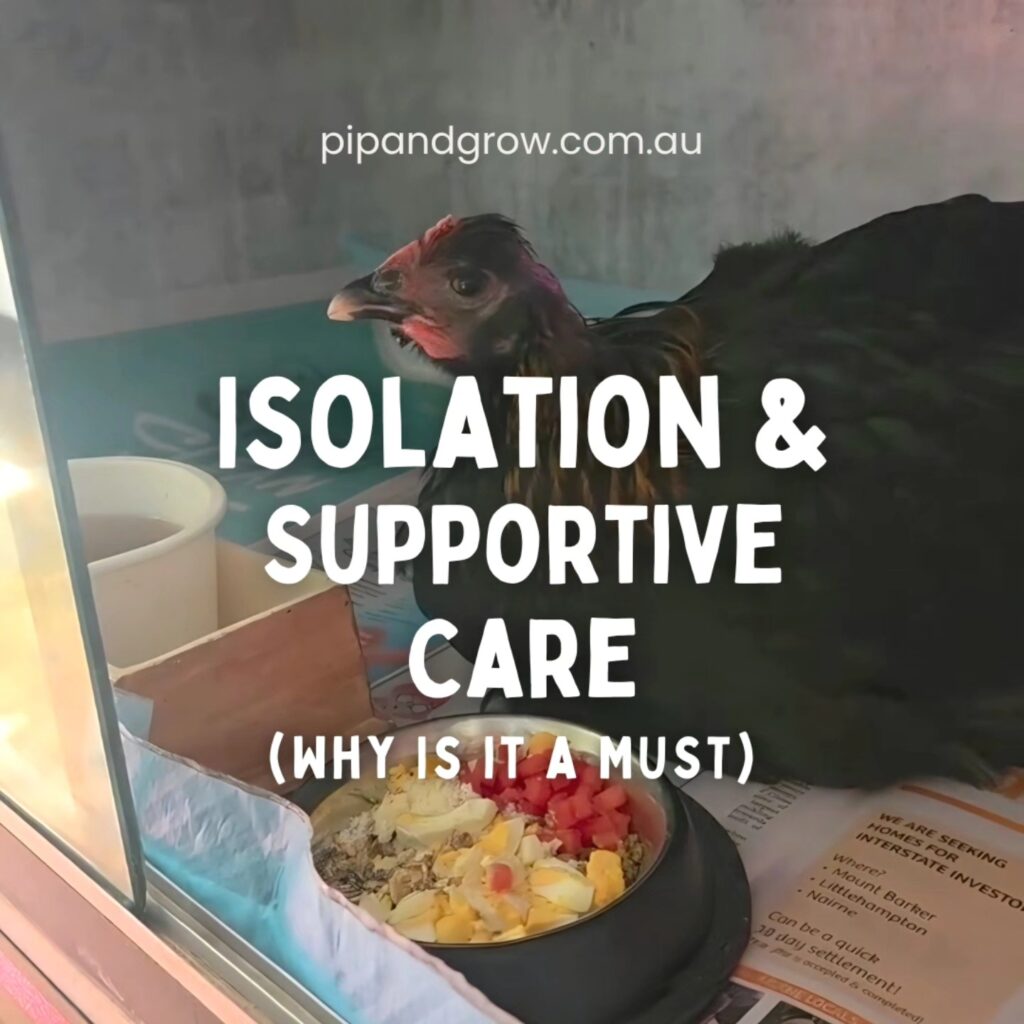
As the weather cools down, your flock’s immune systems face their biggest challenge. Cold, damp conditions are the perfect breeding ground for illness. 

When you walk out to the coop, the first thing you should always be looking for are the subtle signs of a “sick chicken”: huddled, separated, feathers ruffled, head tucked, or tail down.
When you spot a sick bird, Earlier Intervention is Always Best. You must immediately remove them from the flock and place them in an isolation cage.
The Isolation Cage
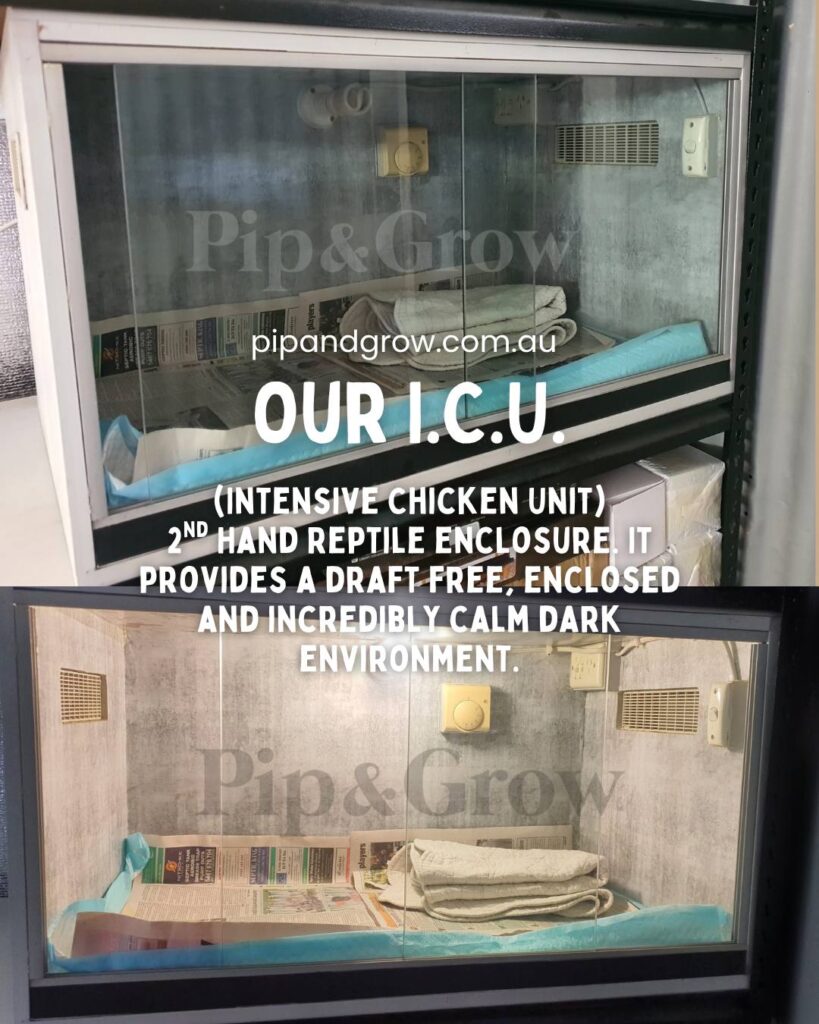
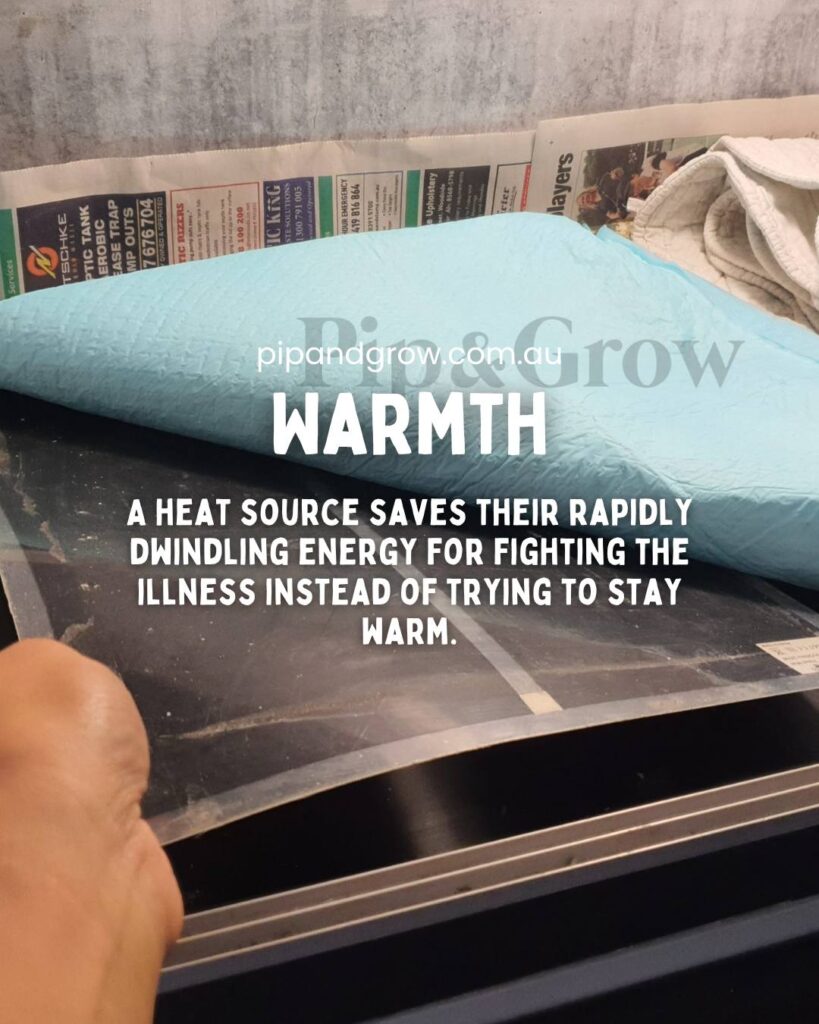
It does not need to be anything fancy. We have an ICU (Intensive Chicken Unit) that was originally a reptile cage we picked up secondhand from Marketplace. It comes with a heat pad, and the enclosed box provides a really calm environment.
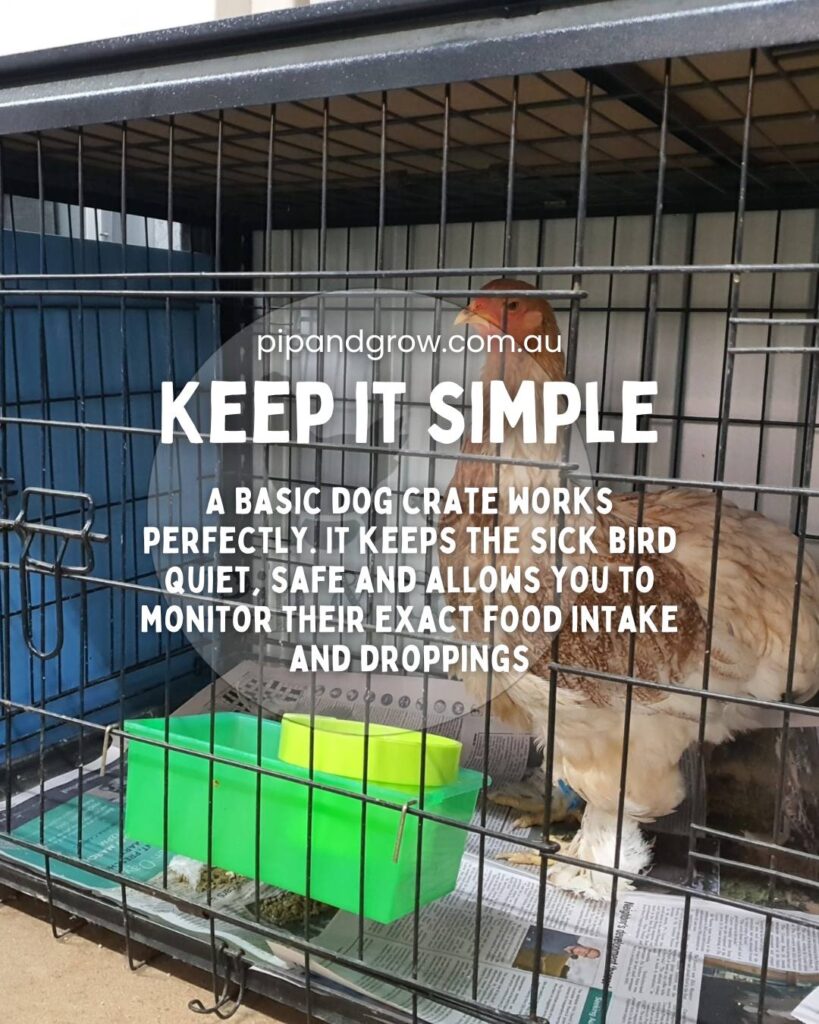
A simple dog crate with a heat source will also do a fine job, or even a large cardboard box with a hot water bottle. As much as we wish you’d never need one, if you are keeping chickens, please always have a setup handy just in case.
Importance of Isolation
1. Monitor
It is impossible to know how much a sick chicken is actually eating and what their poop looks like when they are inside the main coop. Isolation allows you to monitor their exact input (feed/water) and output (poop). This is vital for diagnosis.
2. Provide Supportive Care
In the hospital cage, you can provide the intensive, focused care they need to recover.
3. Prevent Spreading
By isolating the sick bird immediately, you protect the rest of your healthy flock from whatever is ailing the individual, preventing a whole-coop outbreak.
Supportive Care
It is about minimizing stress and maximizing their body’s ability to heal.
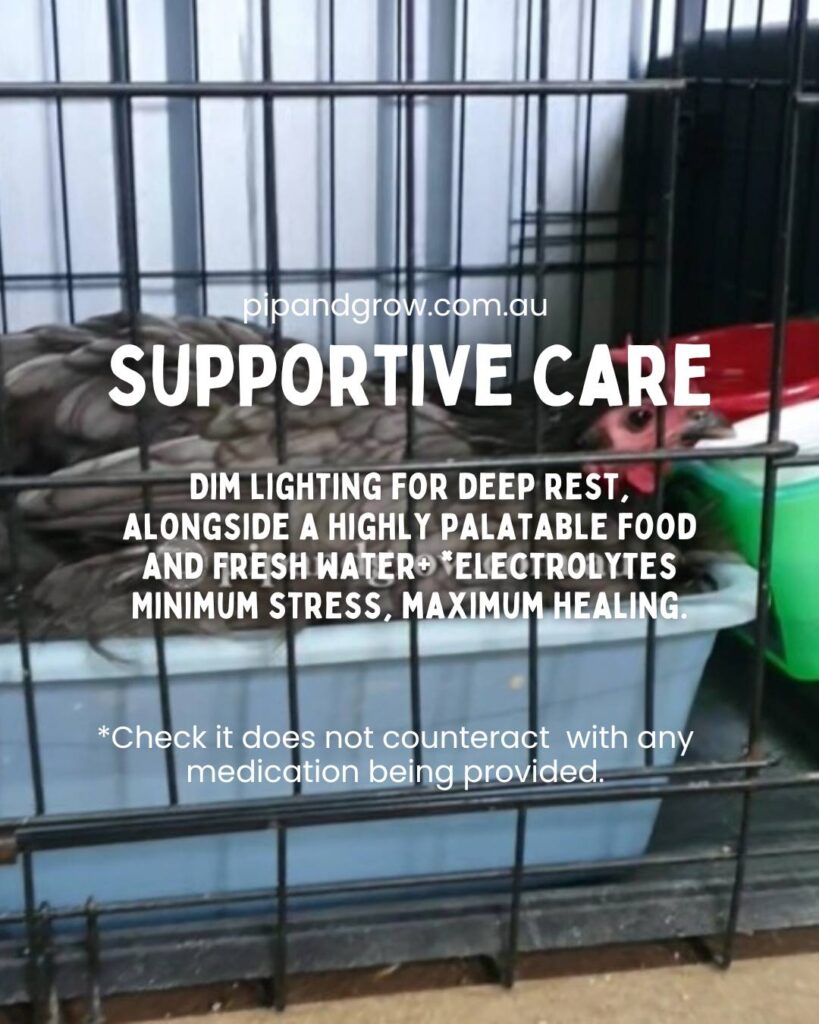
• Quiet & Warm Dark Place: Use a large dog crate or a sturdy cardboard box in a quiet room, garage, or even inside your house. Dim lighting reduces stress and encourages rest.
• Food & Clean Water: Provide highly palatable, nutrient-dense food (like a wet mash) and fresh water (add vitamins/electrolytes if needed).
The MOST Crucial Element: WARMTH
Many new keepers underestimate the absolute importance of warmth. When a chicken is sick, they almost always stop eating or lose their appetite gradually. When they stop eating, they cannot generate the energy (thermogenesis) needed to maintain their body temperature.
If a sick, non-eating chicken is left in a cold coop, 100% of their rapidly dwindling energy reserves will be spent just trying to stay warm. They have very little energy left to fight the infection or recover. Warmth is life-saving supportive care regardless of the illness.


Thank you so much for this information. I didn’t realise the importance of having a heat source while they are ill. I thought only chicks needed that.