Mature weight around 2.8-3kg (Female) 3.8-4kg (Male)
Fast maturing – First egg around 7 month
Large sized tinted light brown eggs, expected to lay around 200-250 per year
Broodiness – Low
Maintenance – Low
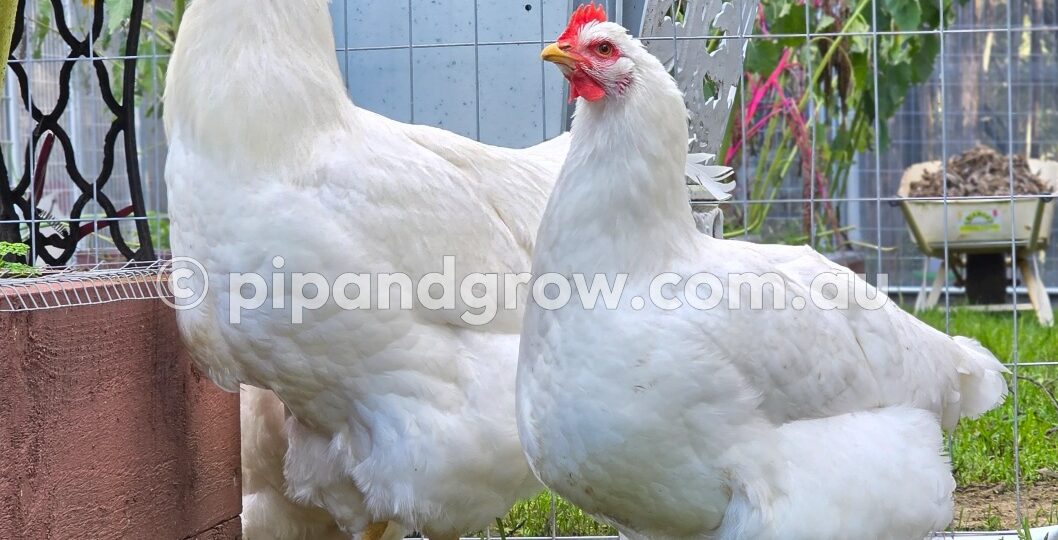
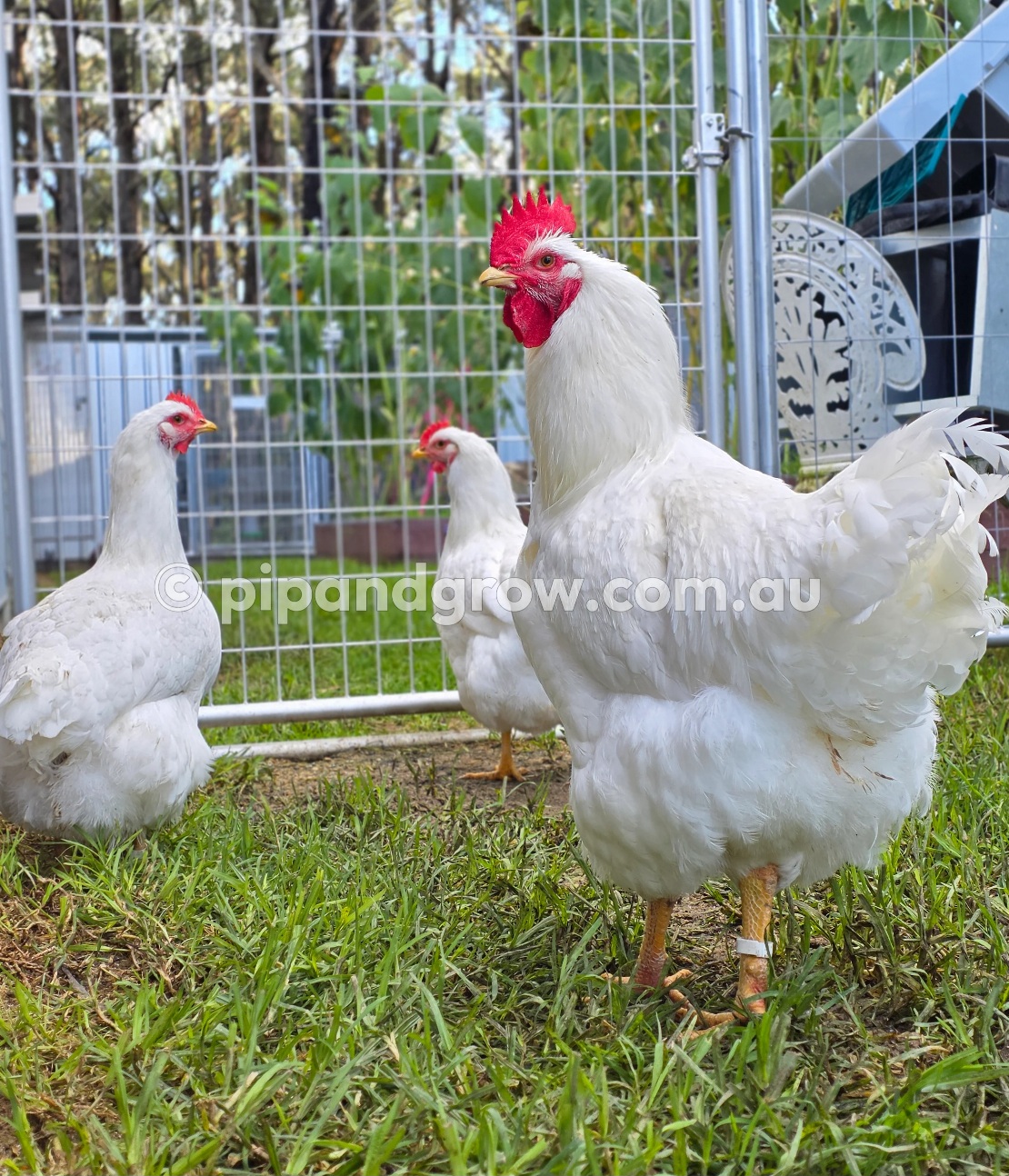
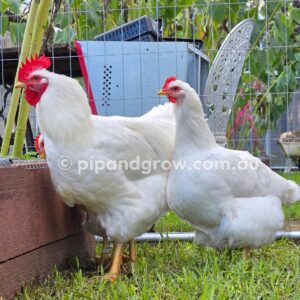
Rhode Island White is still not so common compare to Red variety, but exceptional dual-purpose breed developed in the United States in the early 1900s. Bred from a mix of White Wyandottes, Partridge Cochins, and Rose Comb White Leghorns, this breed was created to be both a reliable layer and a good table bird. They share a name with the more common Rhode Island Red but are a distinct and separate breed with their own unique traits. Rhode Island Whites are striking in appearance with their pure white plumage. There are both single comb and rose comb varieties – we breed the single comb variety. They feature bright red wattles and face, with a long, broad, and well-balanced body that reflects the breed’s strong utility type. The tail is carried at a moderate angle, and both hens and roosters have yellow legs and beaks. These birds are known for being quiet, gentle, and easy to manage. They are friendly but not overly demanding, making them well-suited for small farms or backyard flocks. Hens are generally calm and tolerant, while roosters tend to be protective but not aggressive when properly socialised. Rhode Island Whites are hardy, adaptable birds that handle both cold and warm climates well. Their rose comb is less prone to frostbite than single combs, making them ideal for areas with cold winters. They are good foragers when given free range but also thrive in confined runs with proper care and nutrition. There are relatively few Rhode Island White breeders compared to the Rhode Island Red. Our breeding group is carefully established from three distinct genetic lines to maintain diversity, strong growth, and excellent egg production. Please see Rhode Island – Open Poultry Standard Australia for more info and breed standards.
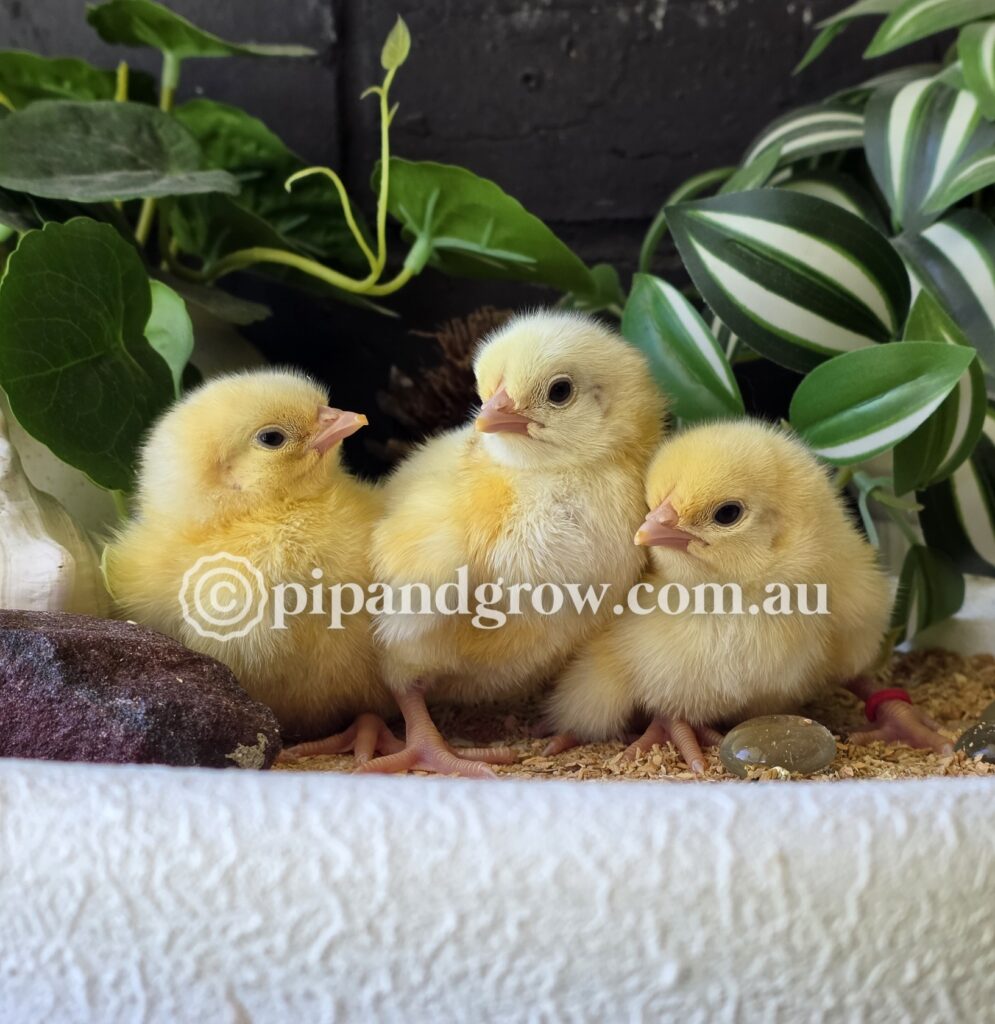
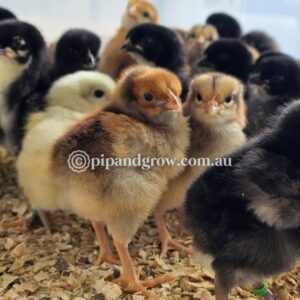
Rhode Island White Chicks
Rhode Island White chicks hatch with soft yellow down and no additional markings. They are clean-legged and feature a single comb. These chicks are energetic, alert, and fast-growing, making them a hardy and lively addition to any flock. They can be sexed around 3-4 weeks by their comb size.