Belgian d’Uccle
Bantam, Porcelain and Millefleur
- Originated from Belgian
- Mature weight is under 700-750g
- Fast maturing – first eggs around 6 months.
- Small sized cream/white coloured eggs, expected to lay between 150 – 180 per year.
- Broodiness – Low to medium
- Maintenance – Low
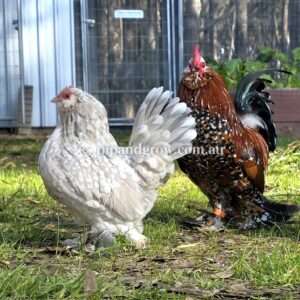
Belgian d’Uccle, also known as Barbu D’Uccle, is a charming and diminutive breed of chicken that originated in Belgium. Small chickens with big hearts, absolutely delightful breed to keep, they are perfect breed for young families in urban environments due to their small size and docile temperament. They can be easily tamed with regular handling. They do very well in smaller, more urban backyards due to their size and are the perfect pets for small children.
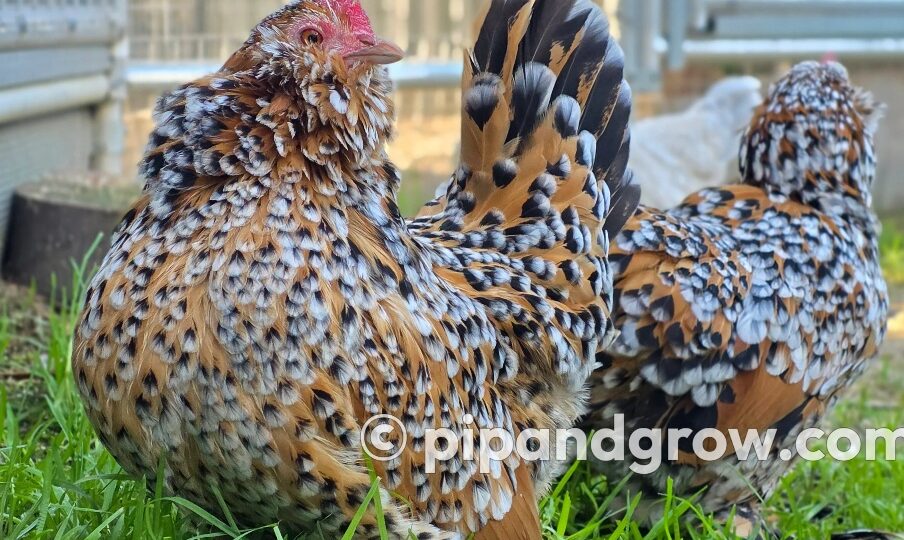
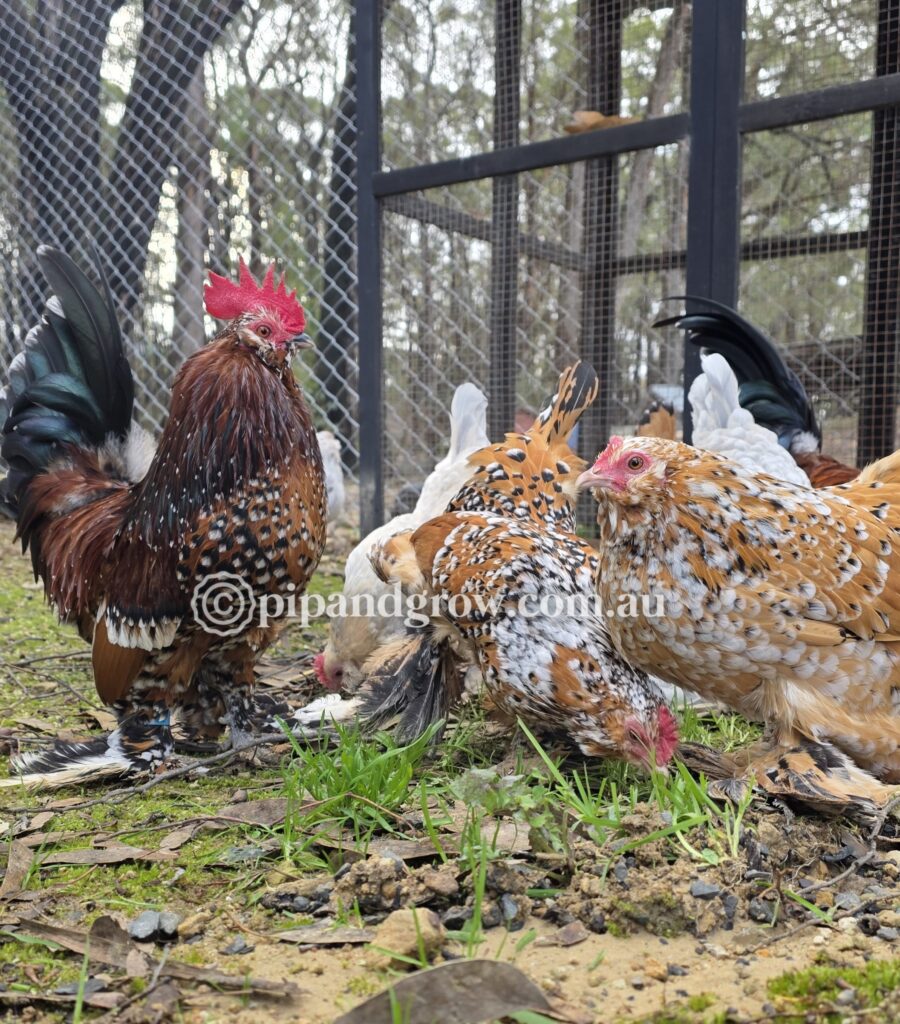
They are tiny chickens with a round, compact body and a profusion of feathers that give them a fluffy and appealing appearance. They have heavily feathered legs and feet, which adds to their overall charm. One of the most distinctive features of the Belgian d’Uccle is its colorful plumage, particularly the MilleFleur variety, which features a base of golden or reddish-brown feathers adorned with black crescents and white tips, resembling a “thousand flowers” in French. Millefleur and Porcelain are closely related colors, and Millefleur can carry the Porcelain gene (split color). Our breeding group produces both varieties.
Belgian d’Uccles are also known for their friendly and docile temperament. They are typically calm and easygoing birds that are well-suited for family settings and are often enjoyed as pets by poultry enthusiasts. They are also known to be relatively good layers of small to medium-sized eggs during season, making them a practical choice for those interested in both ornamental and productive chickens. They are relatively easy to care for and quite hardy, able to tolerate a wide range of climates. However, they can be flighty, so an enclosed pen may be ideal, especially if there are other pets or predators around. Due to their small body size, ample shelter is a must to protect them from harsh weather conditions. Additionally, pens should be designed to prevent muddy conditions, as their heavily feathered feet can be susceptible to this issue.
We have been breeding Belgian D’Uccles since the beginning of Pip & Grow, with our bloodline originating from three exhibition lines across Australia. Over the years, we have selectively bred for quality and consistency. Our birds have consistently produced healthy offspring, with no brittle or shredding feather defects in Porcelain, good toes, and good overall colour. Many of our birds have been successfully exhibited by our customers on various occasions.
Please see Belgian Bantam – Open Poultry Standard Australia for more info and breed standards.
Belgian d’Uccle Porcelain – Genetic Note added 6/12/2025
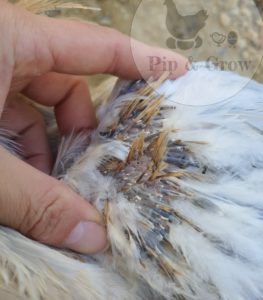
We recently received feedback from a customer advising that one of the porcelain cockerels hatched from our eggs showed a brittle, bald-shoulder feather fault. We have previously seen this issue in Pekins and Belgians from other breeders’ lines, but this is the first time we have encountered it within our own breeding line.
This feathering fault is a known concern in porcelain/lavender based-coloured birds. Many breeders believe it can appear when porcelain is bred over porcelain for multiple generations, though there is currently no scientific research confirming the exact cause. As there is no commercial incentive to study this further, the underlying genetics remain unclear. For this reason, experienced breeders often advise against repeated porcelain-to-porcelain pairings, as doing so may increase the likelihood of faults appearing.
Our current male breeders are Millefleur and Millefleur split to Porcelain, both from new and unrelated bloodlines. Our hens include Millefleur, Millefleur split to Porcelain, and Porcelain from both our own lines and newly introduced lines. None of these birds display this fault. We do not have any straight porcelain-over-porcelain pairings that could have contributed to this issue, and at this stage we are unsure how or why it has occurred. We are continuing to investigate all possible explanations.
This is the very first report we have received since beginning our Belgian breeding in 2021. We expect this fault to appear only in a small percentage of offspring, and the vast majority of birds will not display it and will develop beautifully. It does not affect Millefleur colouring, and we anticipate that only a small proportion of porcelain birds may be impacted. This issue is often seen in male bird than female. The bird itself will be healthy and can live happy life, however it should not be used for breeding. We will be closely monitoring this matter and working toward eliminating it, first step will be eliminating the introduced line and monitor the outcome. We are leaving a note here so there customers are aware of it and can make an informed decision prior ordering.
Belgian d’Uccle Chicks
Belgian d’Uccle chicks are utterly adorable with their small size and charming appearance. They have feathered legs and feet, and impressive beard around beak adding to their endearing appearance.
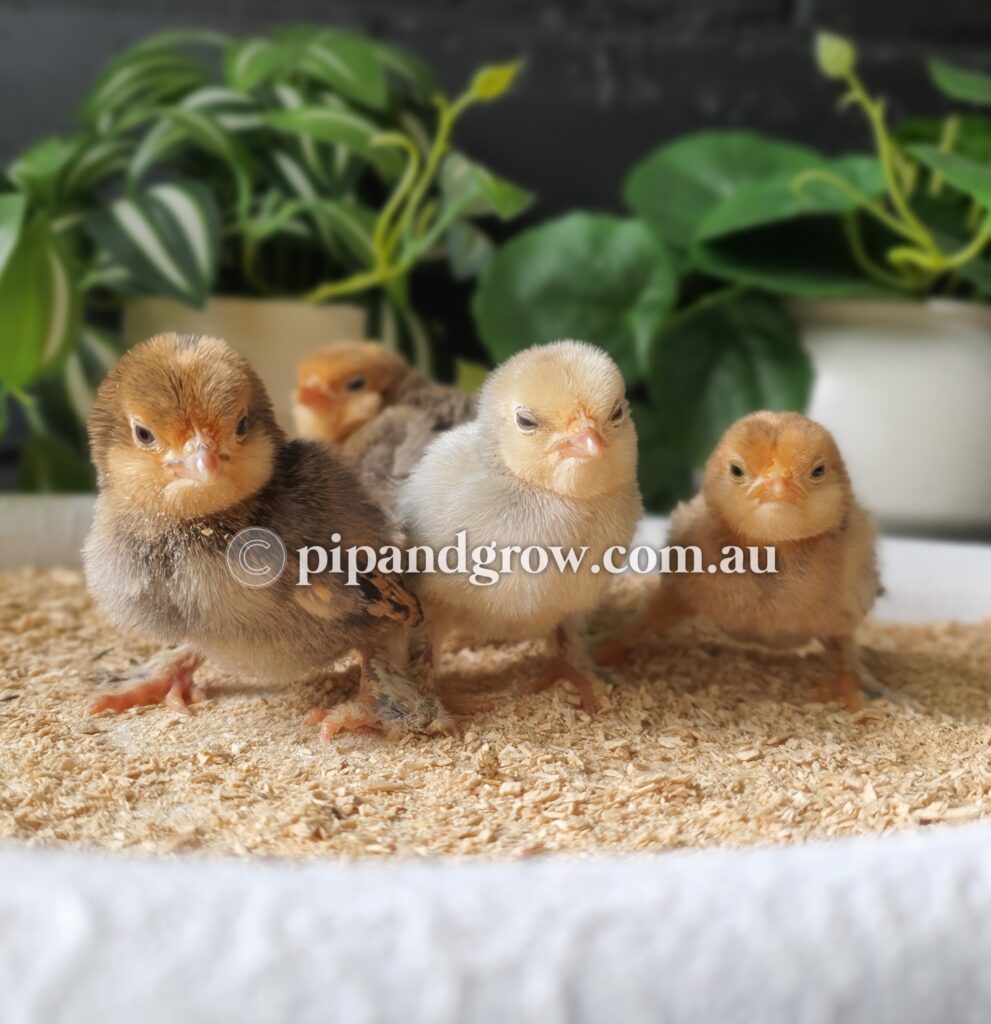
Belgian d’Uccle chicks hatch in a variety of shades.
Chicks with grey bodies and golden heads will grow into Millefleur, while those with a creamy, silvery colour are likely to be Porcelain. All chicks feature adorable muffs and heavily feathered feet. They may be small, but they’re full of personality and energy!
Related post Belgian d’Uccle Sexing Tips
-
![*26/09/2026 Batch* Dayold Chicks]() *26/09/2026 Batch* Dayold ChicksPrice range: $30.00 through $90.00 inc GST
*26/09/2026 Batch* Dayold ChicksPrice range: $30.00 through $90.00 inc GST -
![*12/09/2026 Batch* Dayold Chicks]() *12/09/2026 Batch* Dayold ChicksPrice range: $30.00 through $90.00 inc GST
*12/09/2026 Batch* Dayold ChicksPrice range: $30.00 through $90.00 inc GST -
![*29/08/2026 Batch* Dayold Chicks]() *29/08/2026 Batch* Dayold ChicksPrice range: $30.00 through $90.00 inc GST
*29/08/2026 Batch* Dayold ChicksPrice range: $30.00 through $90.00 inc GST -
![*15/08/2026 Batch* Dayold Chicks]() *15/08/2026 Batch* Dayold ChicksPrice range: $30.00 through $90.00 inc GST
*15/08/2026 Batch* Dayold ChicksPrice range: $30.00 through $90.00 inc GST -
![Belgian D'uccle Fertile egg (each)]() Belgian D’uccle Fertile egg (each)$12.50 inc GST
Belgian D’uccle Fertile egg (each)$12.50 inc GST