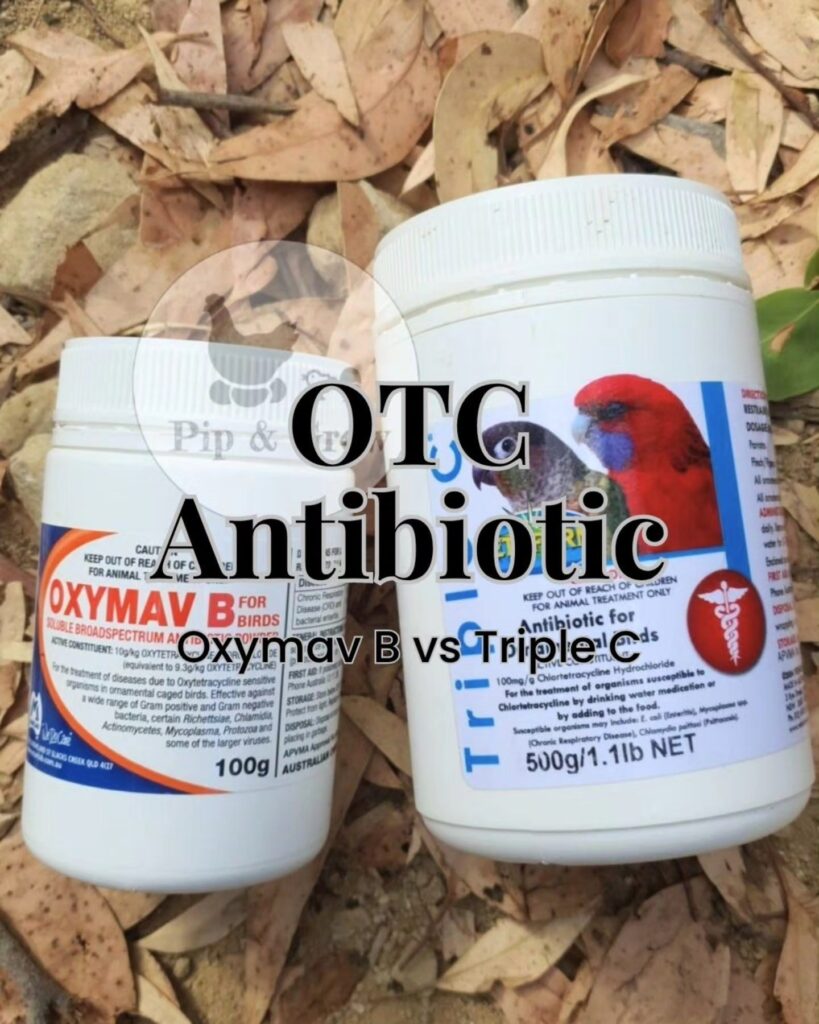
As the nights get colder, we see the dreaded respiratory sneezes often start popping up in backyard flocks. If you need to treat an outbreak, the two most common Over-The-Counter (OTC) options in Australia are Oxymav B and Triple C.
But which one should you choose?
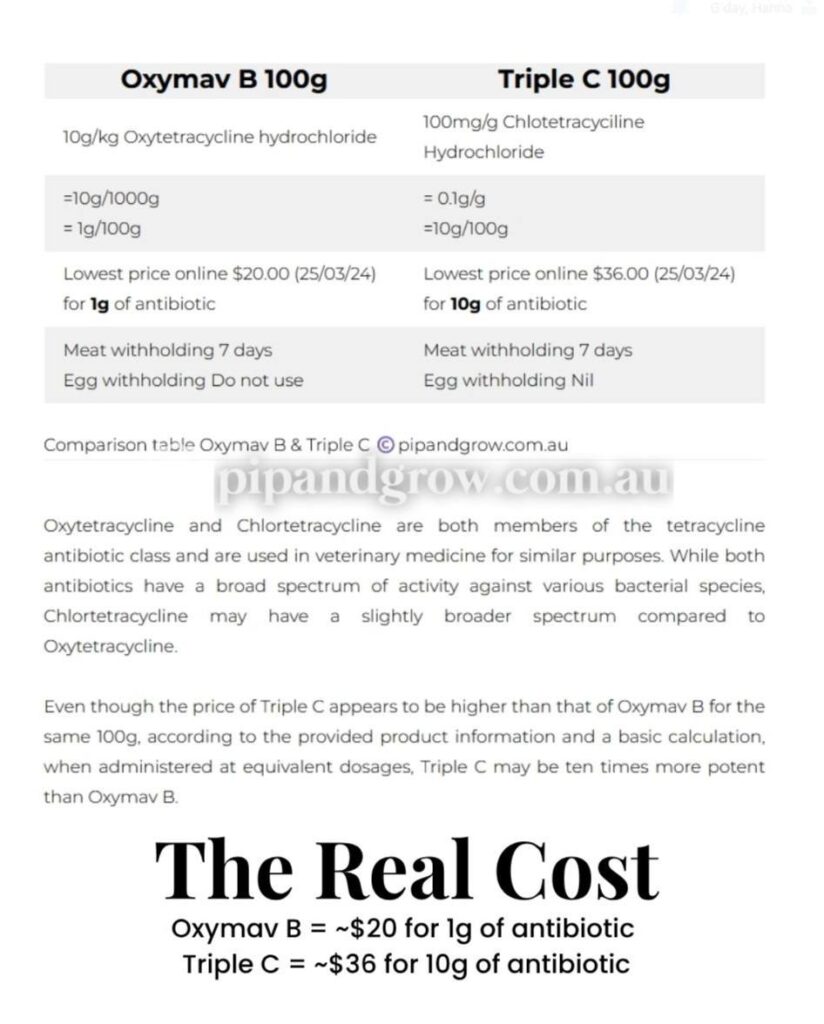
The Cost & Concentration
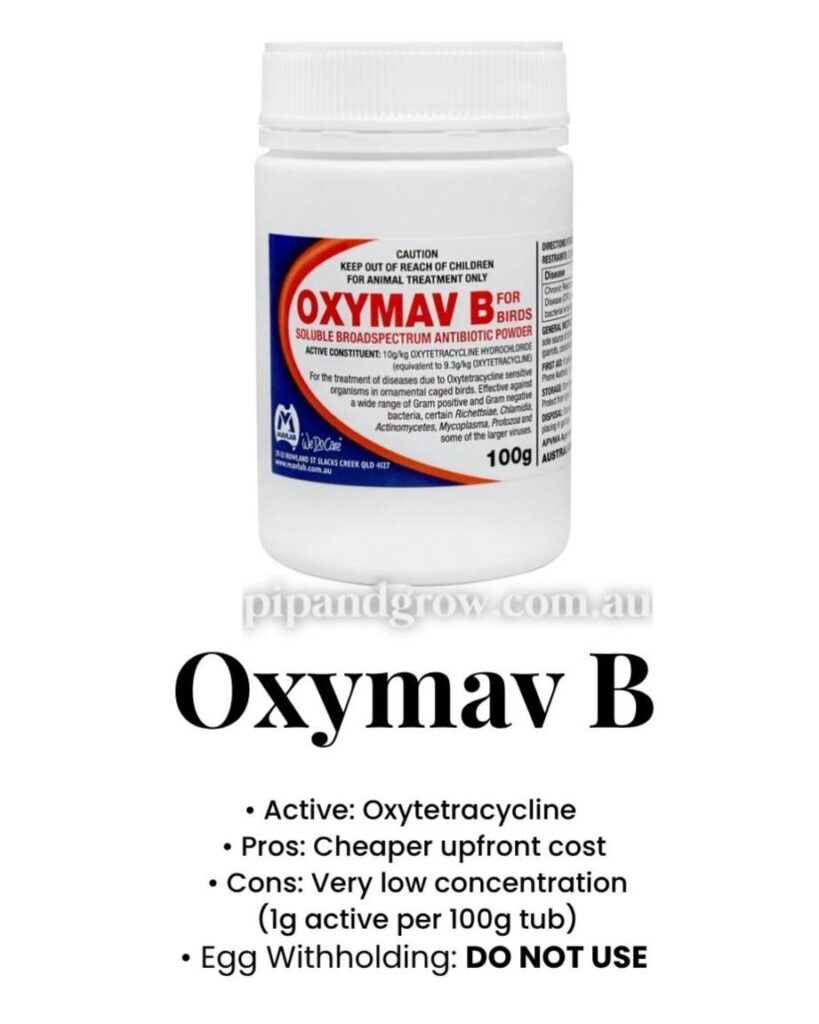
At first glance, a $20 tub of Oxymav B looks much cheaper than a $36 tub of Triple C. But read the labels closely. Oxymav B contains 1g of active antibiotic per 100g tub. Triple C contains 10g per 100g tub.
When administered at equivalent dosages, Triple C is essentially ten times more potent. You are getting significantly more actual medication for your money with Triple C.
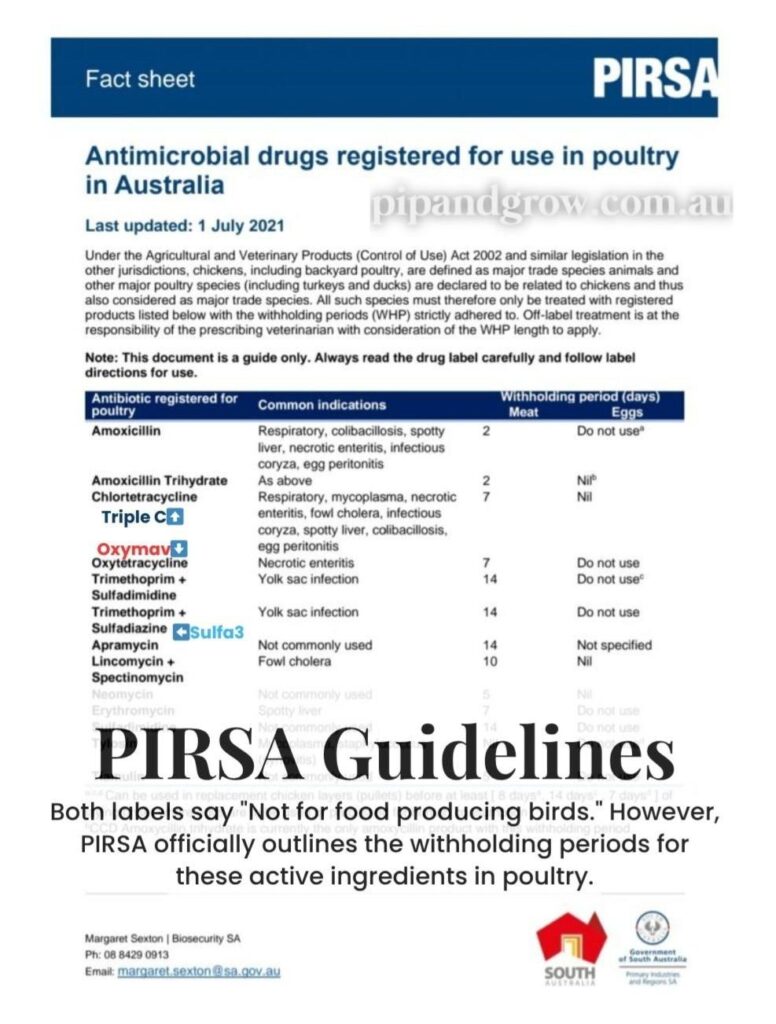
The Egg Withholding Period
Both products are labeled “Not for use in birds intended for human consumption” (ornamental birds). This confuses many keepers. However, in South Australia, PIRSA outlines the legal withholding periods (WHP) for these specific active ingredients in major trade species like chickens.
• Oxymav B (Oxytetracycline): The egg WHP is strictly “Do not use.”
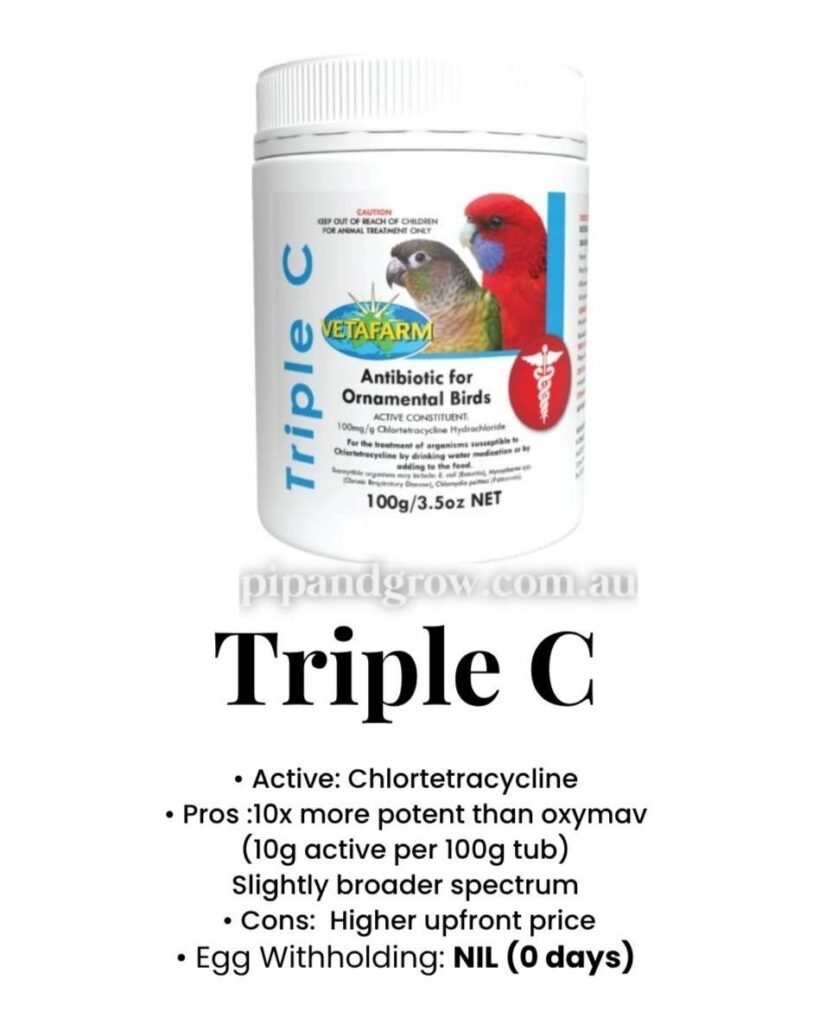
• Triple C (Chlortetracycline): The egg WHP is “Nil.”
For a backyard keeper wanting to safely eat their eggs after an outbreak, Triple C might be a better option.
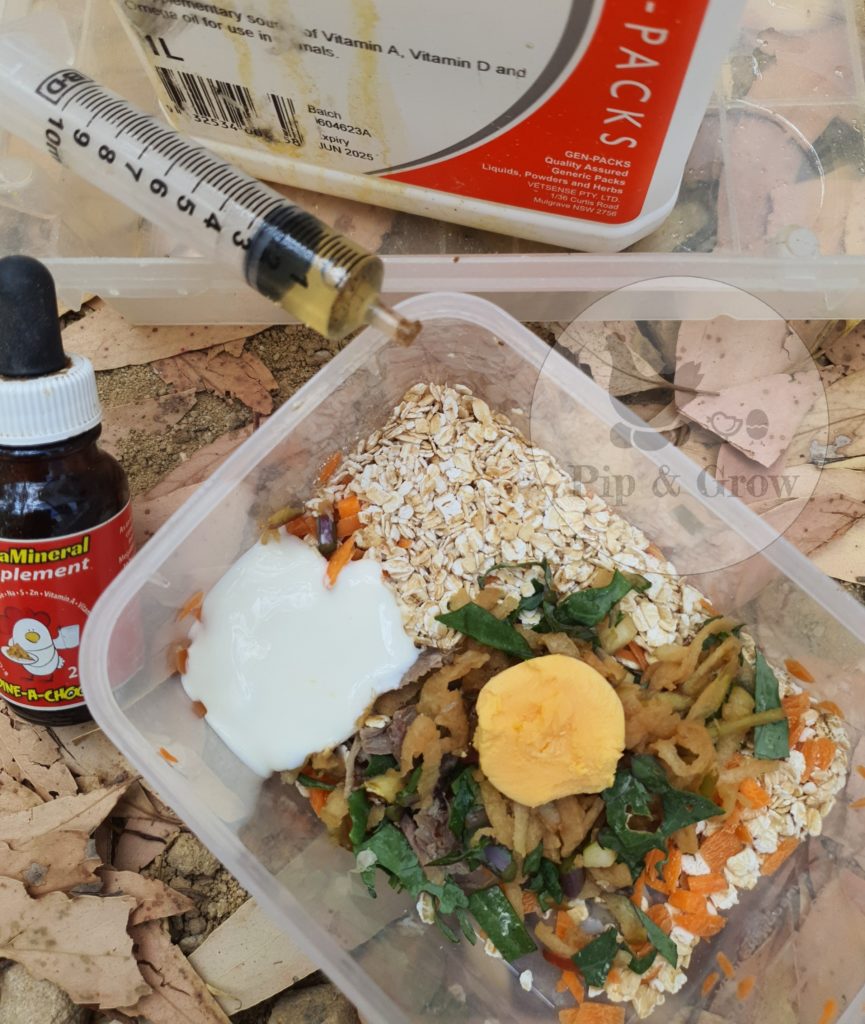
The Golden Rule of Administration
Common misktake When administering antibiotics, please restrict any other supplements or special treats (such as yoghurt or extra minerals). Keep it strictly to their normal feed and the medicated water. Elements like calcium actually bind with these specific antibiotics and cancel out their effectiveness. Treat the illness first, and save the vitamins and probiotics for the recovery stage after the course has completely finished.
Before you reach for either tub, please keep one crucial fact in mind,
Antibiotics only treat bacterial infections.
If your flock is battling a viral disease (like ILT), giving them antibiotics is simply pouring money down the drain and unnecessarily damaging their natural immune system.
Additionally, because both of these are OTC, they are relatively mild, and many poultry populations have already built up resistance to them over the years. If you can afford it, the absolute best route is always to get a proper diagnosis from an avian vet to get the correct, targeted antibiotic and dosage for the best outcome.
We genuinely hope all your chooks are well and never have to use either of these in the coming season. However, we are sharing this information for those who might face an unforeseen outbreak and find themselves unsure of which route to take.